
Ghana’s Season of Confusion: When January Brings Rain Instead of Dust
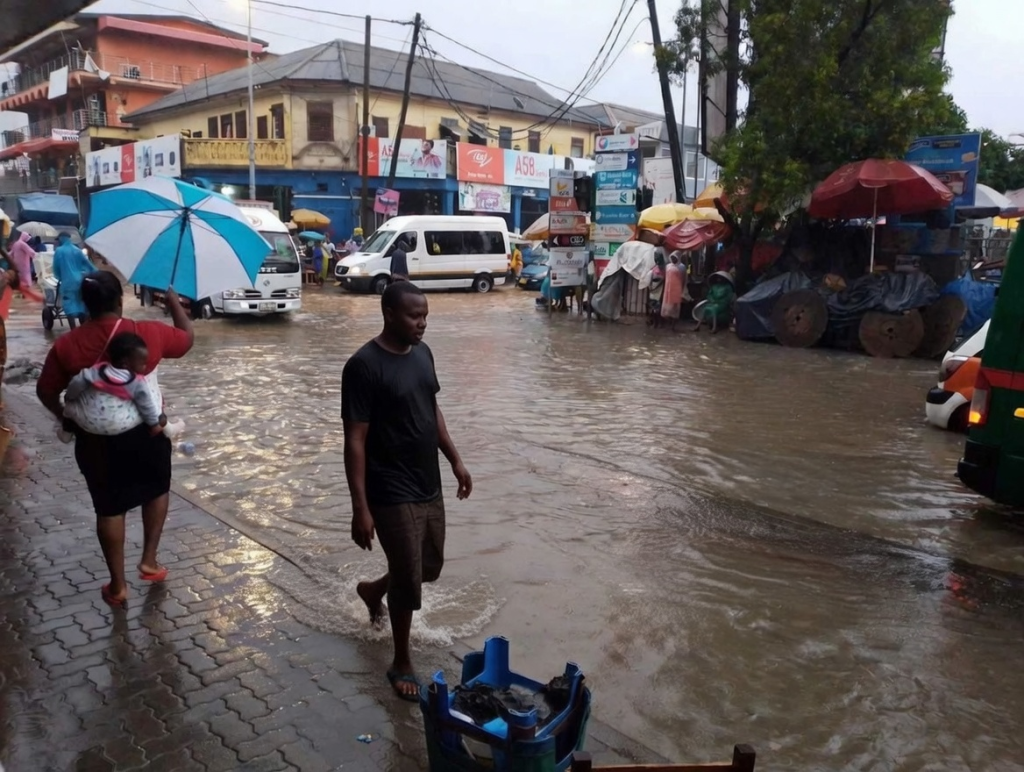
In Accra, a city built around the rhythms of harmattan and monsoon, climate change has scrambled the calendar — leaving residents, farmers, and city planners to navigate a new and dangerous unpredictability.
By Abigail Aboagye-Asare
February 19, 2026
January in Accra is supposed to be the season of dust. Each year, the harmattan, a dry, haze-laden wind sweeping down from the Sahara blankets the Ghanaian capital in a fine, ochre mist, drying lips, coating windshields, and reducing visibility across the Gulf of Guinea. Residents pack away their umbrellas. Farmers mark the calendar. Everyone knows what to expect.
This year, they were wrong.
From December through January 2026, Accra experienced something that confounded both residents and meteorologists: heavy, sustained rainfall during what should have been the driest weeks of the year. Skies that should have been white with Saharan dust were grey with storm clouds. Streets built for the dry season flooded. Market traders lost days of income. And across the city, a single bewildered question echoed: Why is it raining?
The answer, scientists say, is climate change and it is rewriting the atmospheric rulebook that generations of Ghanaians have depended on.
‘The New Normal’
Data from the Ghana Meteorological Agency (GMET) tells the story in numbers. Historically, the December-to-February window brings minimal to zero rainfall across the greater Accra region, accompanied by the visibility-sapping dustiness of harmattan. That pattern, reliable for decades, is fragmenting.
While Kumasi and Obuasi, further inland, still experience the season’s traditional dry character, the south and coast are seeing increasingly erratic weather, unseasonal rains interrupting the harmattan, warm spells where cool relief was expected, and storm events arriving months early or late. Meteorologists describe it as a ‘shift in climate variability,’ but for Accra’s four million residents, it feels more visceral: the calendar they have lived by no longer works.
Climate change, as defined under the United Nations Framework Convention on Climate Change, refers to shifts in the global atmosphere attributable directly or indirectly to human activity. Shifts that are now measurable, consequential, and arriving ahead of schedule in West Africa.
“Life feels unpredictable every day. You plan for harmattan haze and end up reaching for an umbrella instead.”
When the Streets Become Rivers
The consequences are not abstract. On May 18, 2025, flash flooding submerged large parts of Accra and Tema West, an event that would once have been unthinkable during a ‘dry’ period. Roads became rivers. Homes filled with brown water. Commuters waded through intersections. It was, residents noted at the time, a flood of the rainy season, arriving when the rains were not supposed to come.
Such events are becoming less exceptional. Poor drainage infrastructure, choked with plastic waste and encroached upon by illegal construction along waterways, turns even three-hour downpours into disasters. Residents often blame city planners, and with reason: Accra’s drainage network was not designed for a city of its current size, let alone for a climate system in flux.
But climate change amplifies every planning failure. Roads engineered for the dry season crack under unexpected moisture. Coastal erosion accelerates along Ghana’s Atlantic shoreline, threatening communities that have lived on the water for generations. And when the harmattan fails to arrive on schedule, the absence itself causes damage, heat that lingers without the dry season’s cooling structure, accelerating the spread of malaria and other vector-borne illnesses.
A Health Crisis in the Making
The health toll is mounting. Stagnant floodwaters left behind after unseasonal storms breed cholera and dengue, both of which have been surging across Africa. Dengue fever cases on the continent rose nearly ninefold between 2019 and 2023. Malaria, already endemic, finds new footholds as the elimination of seasonal dry spells removes a natural brake on mosquito breeding cycles.
The Intergovernmental Panel on Climate Change has long identified the domains most vulnerable to climate disruption: freshwater resources, food production, forest ecosystems, human settlements, and health. Ghana is contending with stress across every one of them simultaneously.
Farmers who once planned their planting calendars around the reliable arrival of the rains and the harmattan are now guessing. Unpredictable rainfall disrupts crop cycles and threatens food security in a country where agriculture remains central to livelihoods, particularly outside the major cities. Small businesses lose revenue to cancelled market days. Families juggle work and childcare amid flooded streets.
Rewriting Tomorrow’s Forecast
Climate scientists and development experts agree that Ghana’s experience is neither unique nor surprising; it is the leading edge of a transformation affecting developing nations across the tropics, nations that have contributed little to global greenhouse gas emissions but stand to suffer disproportionately from their effects.
The policy responses required are known, even if not yet implemented at scale: risk-smart urban planning that accounts for a changed climate, investment in drainage and flood infrastructure, protection of coastal wetlands that buffer against storm surge, and effective early warning systems that give communities time to prepare. Integrating climate resilience into every facet of national development planning, such as transport, housing, health, agriculture is no longer a long-term ambition but an immediate necessity.
For now, though, Accra is learning to live with uncertainty. Residents check the sky each morning before deciding whether to carry an umbrella or brace for dust. Commuters plan alternate routes in case last night’s rain made certain roads impassable. Traders hope the market day holds.
The weather diary that Ghana’s generations passed down, harmattan in December, rains in May, predictable seasons that ordered life and work and farming has had its pages torn out. The urgent task now is writing new ones.
Abigail Aboagye-Asare writes on climate, development, and urban resilience in West Africa.
