
Accra’s Commute Crisis: Rethinking Public Transport
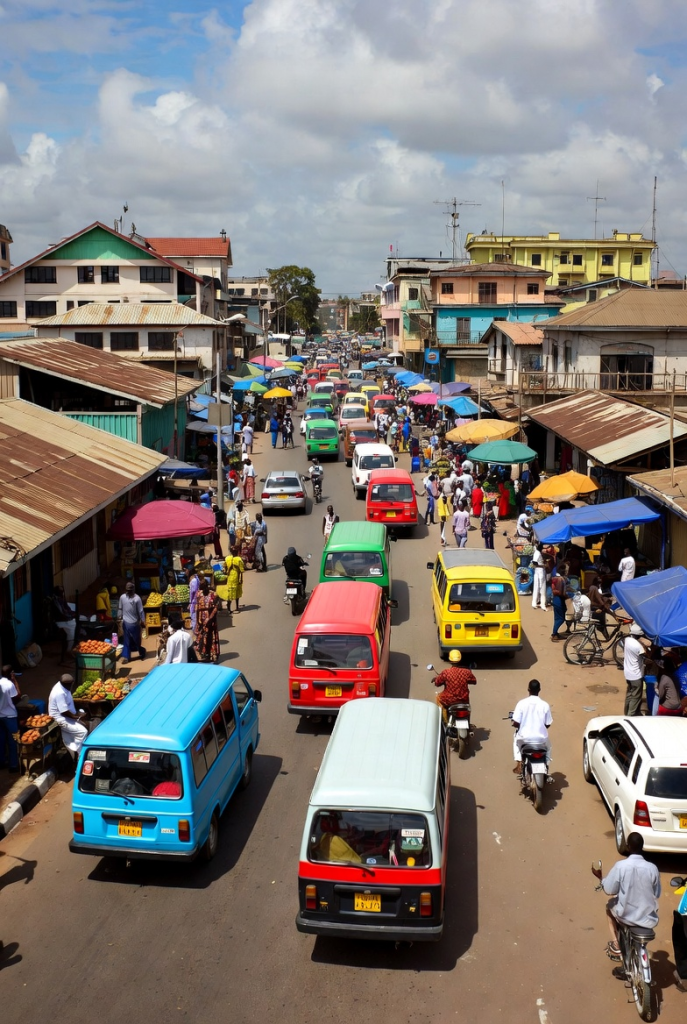
Every morning and evening in Accra, the same scenes unfold: long queues at transport terminals, anxious commuters watching the clock, overcrowded trotros pulling away full, and fares that seem to change without notice. For many passengers, getting to work, school, or home has become an exhausting negotiation rather than a routine journey.
This daily struggle reflects deeper, long-standing weaknesses in how urban transport is planned, regulated, and managed. Recent reports of vehicle shortages, rising fares, and emergency government interventions have only brought into sharper focus what passengers have been experiencing for years.
At the heart of Accra’s transport challenge is a growing mismatch between demand and reliable supply. As the city’s population rises and daily travel needs increase, public transport capacity has failed to keep pace. During peak hours, commuters often wait long periods for vehicles that may never arrive, with some operators deliberately avoiding terminals or designated stops, creating artificial shortages. This situation is compounded by rising costs: unauthorised fare hikes, inconsistent pricing, and informal negotiations between drivers and passengers place additional pressure on already stretched household budgets, turning transport, a tool for access, into a source of inequality. Heavy traffic further slows vehicle turnaround, reduces trips, increases fuel consumption, and leaves fewer vehicles on the road, producing longer queues, higher operating costs passed on to passengers, and growing frustration for commuters.
While emergency measures such as peak-hour bus deployments may offer temporary relief, they underscore the limits of reactive responses. The current passenger experience in Accra reveals what happens when cities rely too heavily on short-term fixes instead of planned capacity. It is within this context that renewed attention has turned to a long-discussed solution: Bus Rapid Transit (BRT). The BRT, a concept intended to transform urban mobility in Accra, was launched and branded as Ayalolo in November 2016. It was designed as a scheduled, well-coordinated, and clearly branded bus system, operating with modern fare collection, dedicated bus lanes, and purpose-built stops. Its implementation was anchored by the establishment of the Greater Accra Passenger Transport Executive (GAPTE), mandated to coordinate urban passenger transport across the Greater Accra Metropolitan Area (GAMA) and facilitate the rollout of a BRT system along major transport corridors. GAPTE identified four primary corridors feeding into Accra’s Central Business District from Amasaman, Adenta, Kasoa, and Tema via the Beach Road, aligning with the region’s key arterial routes linking Accra to other major cities in Ghana.
The BRT system proposed for Accra was never meant to be just another bus service. It was envisioned as the backbone of the city’s public transport network. By prioritising buses in traffic, introducing predictable schedules, and creating a clear separation between high-capacity trunk routes and feeder services, the system sought to fundamentally change how people moved across the city.
In practice, however, the promise of Ayalolo has fallen short. While buses were introduced and terminals constructed, one of the most critical elements of a true BRT system, dedicated lanes, was never fully realised. Without physical separation from general traffic, buses became trapped in the same congestion as trotros and private vehicles, eroding any time advantage for passengers. Stops were inconsistently used and schedules became unreliable. Over time, the system began to resemble a Quality Bus System rather than a classic, lane-segregated BRT.
The challenges associated with the implementation of Ayalolo underperformance extend beyond the absence of dedicated lanes. From the outset, the system was implemented as a partial network, with core BRT elements, including continuous lane segregation, intersection priority, and strong enforcement, either delayed, diluted, or abandoned. This design compromise exposed buses to the same congestion dynamics as other vehicles, neutralising any time and reliability advantages for passengers.
Weak road space management further compounded the problem. Bus lanes were routinely encroached upon by private vehicles, commercial operators, and informal parking, with little enforcement. The symbolic presence of dedicated lanes did not translate into functional priority for buses. At the same time, institutional fragmentation limited coordinated action. Although GAPTE was tasked with overseeing urban passenger transport, it lacked the authority, resources, and political backing to align road design, traffic enforcement, terminal management, and service operations. Transport considerations were often introduced after roads were constructed rather than during the planning phase, making it difficult to retrofit BRT-friendly infrastructure.
Financial and operational realities also constrained Ayalolo. Unlike successful BRT systems globally, the service operates without subsidies, so traffic delays directly translate into financial losses, limiting the incentive to expand services and capping operational efficiency. Meanwhile, informal transport, particularly trotros, was never fully reorganised as feeder services and continued to compete for passengers on the same routes. GPRTU, the main union representing trotro operators, was a key stakeholder in this dynamic; its operational structures and competition for passengers influenced Ayalolo’s ability to consolidate ridership and manage routes effectively.
Addressing Accra’s commute crisis requires more than emergency measures or adding more buses. Effective BRT implementation must treat the system as a road space reallocation project, with at least one continuous lane per corridor exclusively reserved for buses and strictly enforced.
Operations should focus on high-demand trunk corridors, while informal transport, particularly trotros, should be restructured as feeder services rather than competitors.
Operations should prioritize high-demand trunk corridors for BRT services, while informal transport, particularly trotros, is gradually integrated as complementary services within the wider public transport network. This approach is grounded in functional differentiation by trip length and spatial scale, rather than the exclusion of informal transport, and seeks to reduce uncoordinated route overlap through designated stops and integrated fares.
Given GPRTU’s central role in the trotro sector, engaging the union as a partner is essential to consolidating ridership and managing routes effectively. At the institutional level, GAPTE must be empowered as a decision-making authority capable of integrating road design, traffic enforcement, and service planning from the outset. Finally, the financial model should recognise that targeted subsidies tied to performance, reliability, and passenger experience are not failures, but deliberate policy instruments designed to achieve public benefits such as reduced congestion, lower emissions, and improved equity.
The Ayalolo experience demonstrates that the challenge is not whether Accra needs BRT, as the commuter crisis has already answered that question, but how the system must be reimagined, governed, and financed to match the city’s realities while adhering to core BRT principles. Only then can public transport transform from a source of daily frustration into a tool for access, opportunity, and urban development.
By
Angela Brenda Quansah
