
Christmas in Accra: A Festive Season of Traffic and Tension
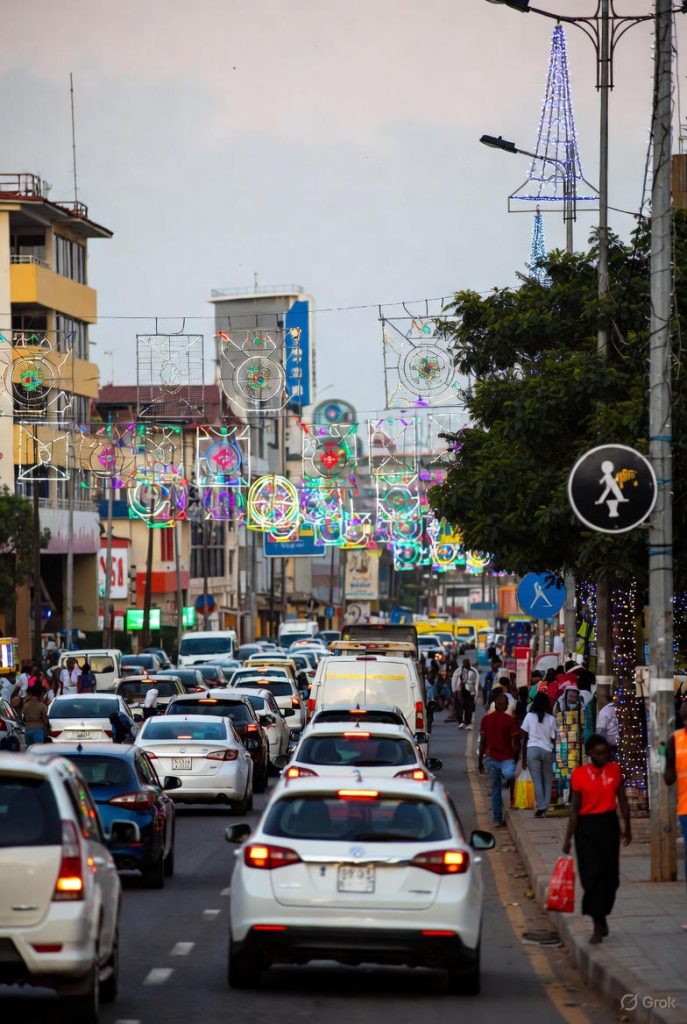
Every December, Accra slips into a unique rhythm; festive lights, overflowing markets, full social calendars, and paralysing traffic. Roads slow to a crawl, tempers flare, productivity drops, and what should be a season of joy becomes a daily test of patience and endurance. This congestion is not a surprise. It happens every year. Yet, each Christmas, the city continues to experience it as though it were unexpected.
Christmas traffic in Accra is not the result of a single failure, but the convergence of several pressures at once. December brings a predictable surge in shopping, travel, events, and social movement, yet traffic management practices remain largely unchanged from other months. Activity concentration is not just in the Central Business District (CBD). Major markets, banks, transport terminals, and informal trading hubs across the city all pull people toward limited road space. At the same time, roadside trading, indiscriminate parking, and pedestrian spill overs encroach on already narrow carriageways, particularly around markets and transport hubs. Unreliable public transport, limited walkable infrastructure, and the sheer volume of private cars and ride-hailing services all combine to further intensify congestion. Interventions from the Motor Transport and Traffic Department (MTTD) are often reactive, responding to standstill traffic rather than preventing it.
Over time, this cycle has been normalised. December traffic is spoken of as inevitable, almost seasonal in its own right. But congestion carries real costs. Hours of productive time are lost, fuel and transport expenses rise, stress levels increase, and emissions worsen in a city already grappling with mobility and air quality challenges. Christmas traffic does not create these problems; it simply exposes them more clearly. Yet this season does not have to unfold the same way every year. The congestion is predictable, and what is predictable can be planned for. Seasonal traffic management should be treated as a necessity, not an afterthought.
December-specific measures such as: temporary one-way systems around major markets, extended pedestrian-only zones during peak shopping hours, and pre-planned diversions, can significantly ease pressure when implemented early and consistently.
Reducing congestion also requires decentralising festive activity. Encouraging alternative shopping and event hubs outside key high-traffic zones, through pop-up markets, satellite transport terminals, and extended operating hours can spread movement across the city rather than forcing everyone into the same core. Stronger regulation of road space is equally critical. Roadside trading on key corridors, illegal parking near intersections, and unrestricted commercial loading during peak hours all undermine traffic flow. Road space is a limited resource, and during peak seasons it must be deliberately protected.
Public transport, too, must become the easier choice. December presents an opportunity to increase service frequency, introduce temporary shuttle services to major markets, and provide clear route information that builds confidence in shared mobility. When public transport works reliably, many people are willing to leave their cars behind. At the same time, planning must account for people, not just vehicles. Safe sidewalks, temporary walkways, and clearly marked crossing points around markets can reduce conflicts between pedestrians and drivers, improving movement for both.
Ultimately, the challenge of Christmas traffic in Accra is not technical alone. It is also a matter of mindset. The question is no longer why traffic worsens every December, but whether mobility should be treated as a priority before roads collapse rather than after. Until that shift happens, each festive season will arrive with the same familiar refrain: yet again, Accra is stuck. But it does not have to be this way.
By
Angela Brenda Quansah
Urban Planner
